INDIVISIBLE Lambertville NJ / New Hope PA

Category: Race/Racism

  • Be an Ally – How to Support Black Lives Matter

    Be an Ally – How to Support Black Lives Matter

    Download the below links as a pdf. Print and post, if desired.

    All Info Black Lives Matter

    Petitions, where to donate, find other protests, educate yourself & more!

    http://tinyurl.com/blmforever

    https://blacklivesmatter.com/

    https://blacklivesmatter.carrd.co/

    VOTE!

    July 7th: NJ primary election

    October 13th: NJ voter registration deadline

    October 19th: PA voter registration deadline

    November 3rd: general election

    To learn more about your political leaders and candidates go to

    https://www.ontheissues.org/default.htm

    For info on how to register, where to vote, the census & more go to

    https://www.vote.org/

    REACH OUT TO YOUR LEADERS

    Find out who your representatives are

    https://www.house.gov/representatives/find-your-representative

    Hunterdon County Officials

    http://www.co.hunterdon.nj.us/official/elected.htm

    Bucks County Officials

    https://my.lwv.org/pennsylvania/bucks-county/elected-officials-guide

    WHAT TO SAY 

    Refer to this link for a phone and e- mail script to guide your dialogue with leaders

    https://imgur.com/gallery/GQwK9UU

    Refer to this link for specific demands to support

    https://act.colorofchange.org/sign/state-emergency-black-people-are-dying/


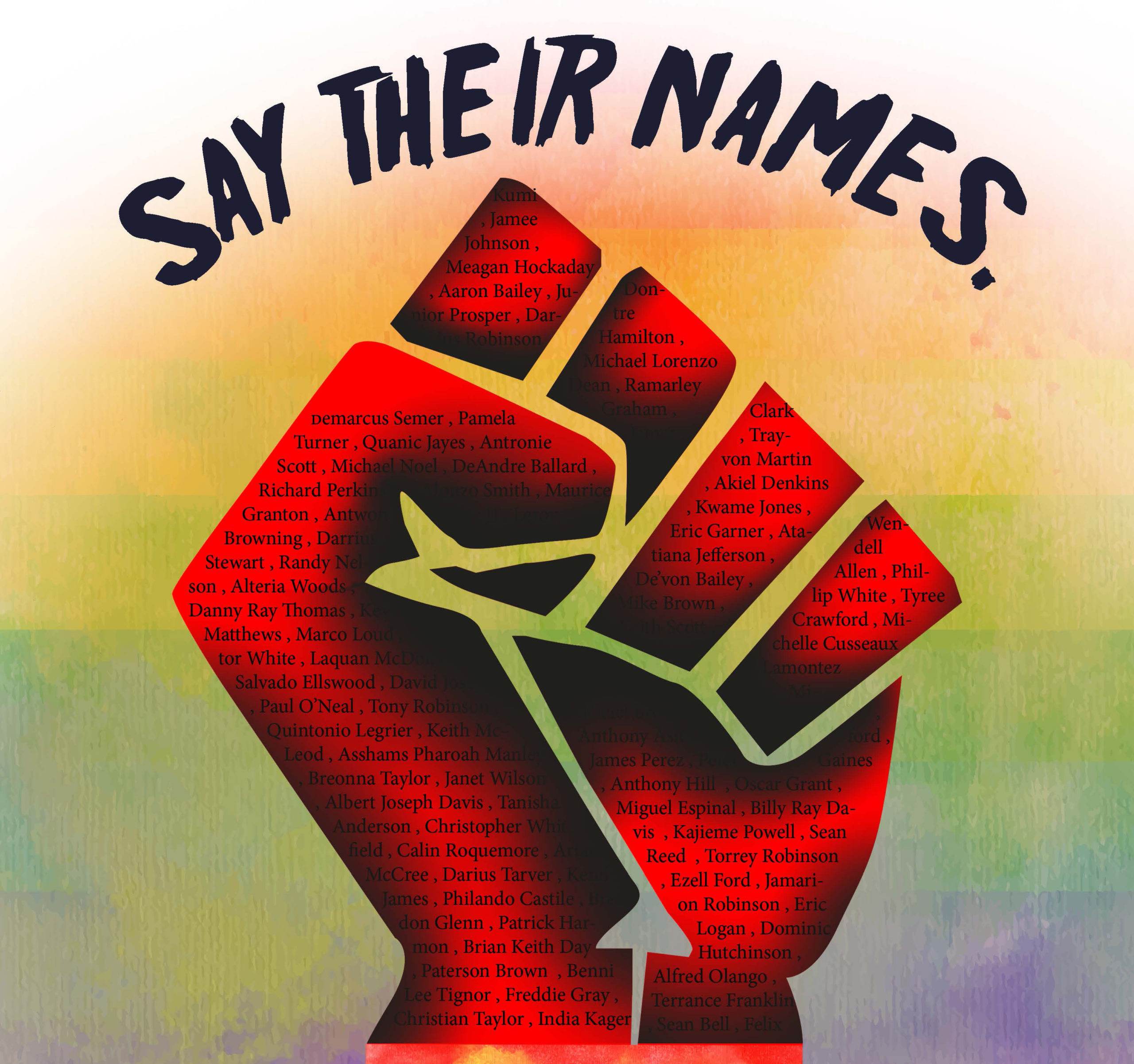
    Sign the Pledge – Right-click the image below, “Save image as” and print it to sign.

  • Why the False Belief that Race Is Biological Needs To Be Confronted

    Contributed by Karen Gaffney.

    As a white, anti-racist educator and author, I have been working with white people for years to address the myth that race is biological. What exactly is this myth? It is the belief that human beings can be biologically or genetically or otherwise scientifically divided into distinct races. It is the belief that white people share more genes with each other than they do with black people. It is the belief that you can draw clear scientific lines between racial groups. 

    None of these beliefs are true. Not only are these beliefs false but they are also dangerous. To begin, why are they false?

    Human beings, regardless of where on the planet they live, are about 99.9% genetically identical. The tiny part that does vary does not correlate with race. The PBS documentary Race: The Power of an Illusion (from 2003 but still very relevant) does an exceptional job of explaining that human beings are a very genetically similar species (compared to penguins or fruit flies) and that there are no genetic traits that can be found in everyone of one race and no one of another race. Within any given race, there is genetic variation, often more variation than between racial groups.

    We tend to think that a random white person has more in common with another random white person than with a random black person, but that is simply not the case. There are genes that influence some easily observable differences between humans, and there are genes that influence differences between humans that are not easily observable. Of the easily observable differences between humans, we have been taught to focus on skin color, almost at the expense of all other possible observable and less observable differences. However, the genes that influence skin color do not correlate with the majority of other traits, like intelligence, athleticism, criminality, and perseverance. 

    We need to recognize that the belief that race is biological is not some abstract or intellectual endeavor. It is a matter of life and death. The false belief that race is biological is dangerous for several reasons:

    • This false belief, which scholars thought would fade over time, has seen a dangerous resurgence, as Angela Saini makes clear in her book Superior: The Return of Race Science (Beacon Press, 2019), which highlights connections between this ideology and the rise of white nationalism in the US and globally.
    • The myth that race is biological is also dangerous because of what is known as medical racism. There is ample evidence that black people are often not treated as well as white people when they encounter the healthcare system, leading to a high black maternal mortality rate and a persistent belief that black people don’t feel pain as much as white people do, a belief that served as a rationale for slavery and corresponds to the racial ideology that black people are not fully human. Dorothy Roberts provides an excellent overview of medical racism in her Ted Talk “The Problem with Race-Based Medicine” and elaborates more generally on the danger of the false belief that race is biological in her book Fatal Invention: How Science, Politics, and Big Business Re-create Race in the Twenty-first Century (The New Press, 2012).
    • The belief that race is biological is an excuse for inequality, a way to accept racially disproportionate prison sentences, wealth, housing, and health outcomes as simply a result of biology rather than systemic racism. 

    My college students, when we discuss the ideology that race is biological, often say they are shocked to hear that race is not biological because their prior schooling never raised this issue and because there are many ways in which the media advertently or inadvertently reinforces this myth. In my experience, once students realize that this belief is indeed a myth and that race is actually a social construct, a human invention, they want to spread the word. Likewise, when I facilitate workshops in the community, either at libraries or churches, and I raise this issue, some white participants in particular share their surprise at hearing this myth is not true, and the older they are, the more concerned they are that it took so many decades for them to learn that this belief is a myth. I’ve been working with a NJ-based social justice theatre company, The Meta Theatre Company, and we created an interactive performance called “Dismantling the Myth that Race is Biological” in order to raise these exact issues and highlight medical racism in particular. 

    The more white people understand that race is not biological, the better, so spreading awareness and sharing resources to help debunk the false belief is important. Then, white people in particular need to work on examining the systems we work in to see how the myth pervades the structure of our work, whether it’s embedded in policy, decision-making, etc. We need to confront this myth, debunk it, recognize its impact, and dismantle it. 

    Karen Gaffney, PhD, is an English Professor at Raritan Valley Community College in New Jersey and the author of Dismantling the Racism Machine: A Manual and Toolbox (Routledge). Her book and her website (https://dividednolonger.com/) expand on the ideas presented here. 

  • Just the Facts!

    Contributed by Olga Vanucci.

    • There are about 48 million African-Americans, which is nearly 15% of the U.S. population.
    • 74% of blacks say that being black is important to how they think about themselves.
    • There are 14.8 million black households; 6.1 million of them own their homes, 8.7 million rent.
    • About 20% of blacks have a college degree and over 50% of blacks have attended college.
    • 2.1 million blacks have advanced degrees (master, PhD, JD or MD).
    • 15% of blacks have annual household incomes over $100k; 40% have incomes between $35k and $100k; 25% have incomes between $15k and $35k; 20% of black families live in poverty (current US poverty threshold is $25,100).
    • 6.2 million blacks work in management, professional and related occupations, including 960,000 working in education and 250,000 in the arts; 4.6 million work in service occupations; 4.3 million work in sales and office occupations; 4.2 million work in production, transportation, construction and maintenance.
    • There are some 90,000 black doctors and 73,000 black lawyers.
    • There are 2.6 million black-owned businesses. 
    • There are 53 blacks in the U.S. House of Representatives and 3 black senators.
    • There has been 1 black U.S. President.

    Sources:  https://blackdemographics.com/

    and https://www.pewresearch.org/fact-tank/2019/02/08/for-the-fifth-time-in-a-row-the-new-congress-is-the-most-racially-and-ethnically-diverse-ever/

    and  https://www.bls.gov/cps/cpsaat11.htm

    and https://www.pewsocialtrends.org/2019/04/09/the-role-of-race-and-ethnicity-in-americans-personal-lives/

  • I Am an Indigenous Woman; We Are All Someone’s Prayer for Change

    The following speech was given by Niya Maniez-Wassegiig, a South Hunterdon High School senior, at the recent Climate Strike held in Lambertville. We offer this with gratitude to both our next-generation of leaders and all Indigenous people as protectors of the earth. 

    Aaniin, Hello,

    I would like to thank everyone who came to the climate strike today. I am Niya Maniez-Wassegiig and I am a tribal member of Wikwemikong First Nation in Canada. I am a senior in high school and a resident of Lambertville. I am an Anishinaabekwe, or indigenous woman, I am a social activist and an artist. 

    Climate change affects indigenous people and marginalized communities disproportionately. Indigenous people are only 5% of the world’s population, and yet, our communities are at the forefront of protecting the earth, advocating against fossil fuels, and recognizing water as sacred. We “protect nearly 80% of biodiversity” according to the U.N. But protecting the earth, our mother, is not the responsibility of native people. It is everyone’s responsibility. 

    Some indigenous communities are deeply connected to the earth and rely directly on and contribute positively to particular ecosystems which are threatened by climate change. Not only is indigenous land often forcibly taken and used for fossil fuels and other natural resources, but the land to which indigenous peoples have been forcibly relocated is often the least fertile and the least livable. 

    The climate crisis exacerbates this problem because most indigenous communities do not have the resources or flexibility to respond. There are so many reservations that do not even have clean drinking water. According to the Southern University Law Center’s 2019 study, nearly 50% of tribal homes lack clean water, or even access to water, in the U.S. Meanwhile, the natural resources which are available on the land are funneled away for use by non-indigenous people. At the same time, fossil fuel companies seek out these areas to take advantage of because these big businesses know that no one will care or call media attention to what is happening to marginalized communities. 

    But my people are rising up, we are making change. When people hear the word “pipeline” they often think back to the the Dakota Access Pipeline and Standing Rock. Standing Rock began when a youth group set up a small prayer camp on their reservation. You may have also heard news of the conflict on Mauna Kea, where indigenous people are blocking roads to protect the sacred mountain. 

    These examples have gained a lot of news coverage, but these are not the only examples of indigenous communities rising up to protect sacred earth from big businesses. Oil and natural gas companies continue to undermine these underprivileged communities, aiming to make money instead of aiming to avoid a climate crisis. In order to solve this crisis, it is important to remember that equity is key. 

    Our own community here in Lambertville has been confronted with similar issues regarding a pipeline. It has been a long road that has worried many members of our community. Here in Lambertville, we are lucky to have wealth on our side, along with many educated people that are embedded in our systems of government and business that are helping to put a stop to an unneeded and unwanted pipeline. Imagine all the communities within North America that do not have the same resources as our community. In those communities, the pipeline would already be in the ground. 

    It scares me when I see that so few people are concerned about the climate crisis. People older than me frequently have little to no concern, because it is not them who will have to live in this world after it has become uninhabitable. So then why is it that people my age and younger also do not care? It is because they see no reason to try, they believe in climate change and what will happen, but we have become so numb to it that it no longer seems to matter.  

    We can allow this possible future to lull us into depression or complacency, or we can choose to allow this crisis to fuel our progress to problem solve creatively and in collaboration with each other. It is important for us to be together here, on the streets, but what is more important is for us to take action when we leave. Let this gathering be a catalyst for us to make change now. When we leave this strike today, what we will organize to do in our community to make change?

    Oren Lyons, Chief of the Onondaga Nation, writes: “We are looking ahead, as is one of the first mandates given us as chiefs, to make sure and to make every decision that we make relate to the welfare and well-being of the seventh generation to come. … What about the seventh generation? Where are you taking them? What will they have?”

    In closing, I would like to share with you the words of Autumn Peltier, a young woman from the Wikwemikong reservation. At just the age of fourteen, Autumn was recently named chief water commissioner for Anishinabek Nation. This is what she has to say: 

    “You are someone’s seventh generation, you are the change, you are someone’s hope, you are someone’s prayer for change.” 

    Migwetch, thank you. 

    Sources: 

    https://www.un.org/development/desa/indigenouspeoples/climate-change.html

    https://www.nytimes.com/2017/01/31/magazine/the-youth-group-that-launched-a-movement-at-standing-rock.html

    https://racism.org/articles/basic-needs/207-food-and-water/3070-the-reservation-water-crisis