INDIVISIBLE Lambertville NJ / New Hope PA

Category: Civil Rights

  • Time to THRIVE

    Time to THRIVE: From the multilateral racial, health, economic, and environmental crises to the THRIVE Agenda

    Contributed by Alexis Berends.

    In recent years, the deep links between racism and climate change have been coming to the forefront. Issues of Environmental Injustice have been highlighted in such catastrophes as Hurricanes Katrina and Maria, the fight to protect our water at Standing Rock, as well as within the Covid 19 crisis.

    Climate change and racial inequality are the direct result of industry – from clearing lands to grow cotton, sugar and tobacco in our early colonial history, to modern industrialization of agriculture, fishing, and the extraction of fossil fuels. In order to expand the colonial agricultural industry, the colonial countries in the Americas enslaved the Native populations, forcing them to exploit the lands they spent 11,000 years developing an intimate stewardship with. Others were expelled from their lands, or worse. Later, Africans were brought across the Atlantic in shackles, solidifying the industrialization of the Americas and forever imprinting a framework for systemic racism.

    These practices exist to this day, albeit in seemingly innocuous policies. We still force Tribal communities from their sacred lands to extract fossil fuels and build coinciding infrastructure under the guise of “energy security.” It exists in our use of immigrant labor, many with indigenous roots, to work our fields in illegal and inhumane conditions; in our crowded prisons where a disproportionate number of black and brown inmates make many of the products that proudly bare the label “Made in America”; and by underpaying workers in the critical healthcare and service industries which are traditionally dominated by women, especially women of color. Since its birth, America has been mistreating the environment, people of color, indigenous cultures and lands, and women alike. We can and must do better.

    BIPOC and marginalized communities bear the brunt of our unsustainable industries. For example, New Jersey is home to the most superfund sites per capita, most of which are in the Black and Latinx neighborhoods of Camden and Newark. Pennsylvania is #3 on the list of having the most superfund sites per capita, primarily in the communities surrounding Philadelphia and Chester counties. People in these areas commonly suffer from chronic lung diseases, such as asthma, which have exacerbated COVID-19 infections disproportionately. They have been screaming “I can’t breathe” for generations, and it’s no wonder that both Eric Garner and George Floyd had asthma.

    The COVID Crisis has put more pressure on our already fragile system. We face staggering unemployment levels, a broken economy, increased stress on women and mothers who are forced to assume multiple roles in unprecedented circumstances – especially women of color, and an overburdened healthcare system. At the same time, climate scientists are urging us to dramatically reduce carbon emissions by 2030 – just nine years away – and meet carbon neutrality by 2050 in order to slow global warming by 1.5 degrees celsius above pre-industrial levels. A dire existential threat is staring us in the face yet we have our blinders on.

    So how do we build a more just world? What policies are being introduced that could create a more sustainable future – environmentally, socially, and culturally?

    The THRIVE Agenda: Transform, Heal, and Renew by Investing in Vibrant Economy

    Now that the American Rescue Plan has been passed, the next step is to focus on how we will recover from the multifaceted crises we are currently facing. The THRIVE Agenda is a recovery package that calls for transformative, sustainable, and equitable change with meaningful action to respond to the Climate Crisis. THRIVE will provide access to healthcare, childcare, elderly care, and assistance for the disabled and chronically ill, and provides a framework for the just transition to sustainable development, particularly in the energy, agricultural and construction industries. Within this framework the resolution will focus on economic, racial, health, and environmental recoveries through 8 interrelated pillars:

    • Creation of 16 million good, safe jobs with family sustaining wages that have access to unions;
    • Investment in Black, Brown, and Indigenous communities;
    • Combating problems of racial and environmental injustice and ensuring healthy lives for all, as declared by the United Nations Universal Declaration of Human Rights of which the United States is a signatory;
    • Ensuring fairness for workers and communities affected by economic transitions;
    • Building the power of workers to fight inequality;
    • Strengthening and healing the nation-to-nation relationship with sovereign Native
      Nations and implementation of the United Nations Declaration on the Rights of
      Indigenous Peoples, adopted by the United States in 2010;
    • Averting climate and environmental catastrophe while building climate resilience to mitigate against the impacts of global warming and rising sea levels;
    • Reinvesting in public institutions that enable workers and communities to Thrive.

    Support for the THRIVE Agenda
    At present, the THRIVE Agenda is supported by 89 members of congress, 10 Senators and roughly 300 organizations, including leading labour unions such as the American Federation of Teachers; racial justice groups including Movement 4 Black Lives and the NAACP; environmental groups such as the Sierra Club, Greenpeace and Natural Resources Defense Council; indigenous groups, immigrants’ rights groups, women’s rights groups, faith groups, think tanks, and even Indivisible. In a survey done by Data for Progress, the majority of Americans, including in swing states and battleground House districts, support the 8 Pillars of the THRIVE Agenda with support for each pillar ranging from 54-77% of all registered voters, and as high as 72-91% of registered Democrats.

    Call to Action

    While there is growing support in both the House and the Senate, we still need to apply pressure on our elected officials. Many Democrats are still needed as cosponsors, and zero Republicans have yet to sign on. So far, only 3 congresspersons from both New Jersey and Pennsylvania respectively have signed, and both Malinowski and Fitzpatrick have yet to cosponsor.

    Reach out to your representatives and let them know we support the THRIVE Agenda. Give them a call, shoot them an email, and tag them on social media using the hashtags #TimetoTHRIVE so they can see how strong our movement is.

    It is time for us to recover as a nation by addressing the multilateral economic, racial, health, and environmental crises we have collectively experienced en masse this past year. We have been given an opportunity to rewrite the future of our country to ensure that it provides a healthy, economically and environmentally sustainable life for all. Don’t let this opportunity pass us by. This is our time to THRIVE.
  • Protesters: Know Your Rights

     From the ACLU.

    • Your rights are strongest in what are known as “traditional public forums,” such as streets, sidewalks, and parks. You also likely have the right to speak out on other public property, like plazas in front of government buildings, as long as you are not blocking access to the government building or interfering with other purposes the  property was designed for.
    • Private property owners can set rules for speech on their property. The government may not restrict your speech if it is taking place on your own property or with the consent of the property owner.
    • Counterprotesters also have free speech rights. Police must treat protesters and counterprotesters equally. Police are permitted to keep antagonistic groups separated but should allow them to be within  sight and sound of one another.
    • When you are lawfully present in any public space, you have the right to photograph anything in plain view, including federal buildings and the police. On private property, the owner may set rules related to photography or video.
    • You don’t need a permit to march in the streets or on sidewalks, as long as marchers don’t obstruct car or pedestrian traffic. If you don’t have a permit, police officers can ask you to move to the side of a street or sidewalk to let others pass or for safety reasons.

    What to do if you believe your rights have been violated

    • When you can, write down everything you remember, including the officers’ badge and patrol car numbers and the agency they work for.
    • Get contact information for witnesses.
    • Take photographs of any injuries.
    • Once you have all of this information, you can file a written complaint with the agency’s internal affairs division or civilian complaint board.

    What happens if the police issue an order to disperse the protest?

    • Shutting down a protest through a dispersal order must be law enforcement’s last resort. Police may not break up a gathering unless there is a clear and present danger of riot, disorder, interference with traffic, or other immediate threat to public safety.
    • If officers issue a dispersal order, they must provide a reasonable opportunity to comply, including sufficient time and a clear, unobstructed exit path.
    • Individuals must receive clear and detailed notice of a dispersal order, including how much time they have to disperse, the consequences of failing to disperse, and what clear exit route they can follow, before they may be arrested or charged with any crime.
  • Expand Your Mind with Upcoming Civil Rights Action Group Activities

    Expand Your Mind with Upcoming Civil Rights Action Group Activities

    Contributed by Shara Durkee.

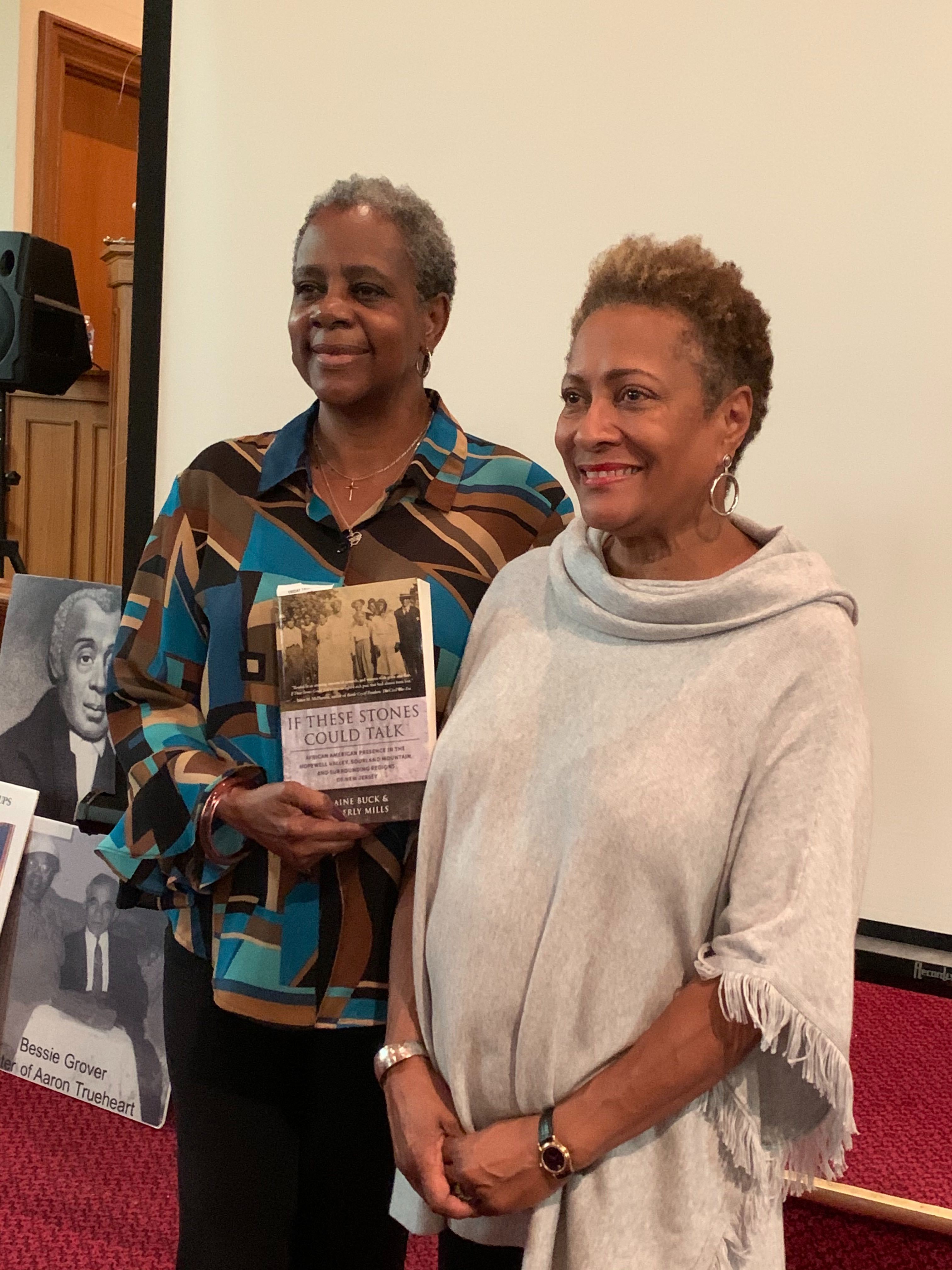
    Book Club Meeting Monday –  11/18/19 6:30 pm at 138 George Street, Lambertville. We are discussing If These Stones Could Talk: African American Presence in The Hopewell Valley, Sourland Mountain, and Surrounding Regions of New Jersey, by Elaine Buck and Beverly Mills. 

    Workshop Wednesday, 11/20/19 at 6:30 pm at the Lambertville Public Library.  “Dismantling the Racism Machine: Myths Taught to White People That Perpetuate White Supremacy” led by Karen Gaffney.

    Based on Dr. Karen Gaffney’s book Dismantling the Racism Machine: A Manual and Toolbox, this workshop will consider the question: Why is it that white people have such powerful beliefs that make it so challenging for them to acknowledge the persistence of systemic racism and their participation in these systems? This workshop will identify 3 core myths that white people are taught that contribute to the perpetuation of white supremacy. These myths include the false beliefs that race is biological, that race, including whiteness, has always existed, and that systemic racism is no longer a serious problem. The workshop will share strategies for debunking these myths in order to develop an anti-racist perspective, and we will include time for discussion and action planning.

    Dr. Karen Gaffney is Professor of English at Raritan Valley Community College in New Jersey. As a white anti-racist educator, she presents at national conferences, facilitates community workshops, and shares resources on her blog Divided No Longer (available at www.dividednolonger.com).  Her recent book, Dismantling the Racism Machine: A Manual and Toolbox (Routledge, 2018), is an accessible and interdisciplinary introduction to race and racism with tools for action. She currently serves as a Public Scholar for the NJ Council for the Humanities.

    Book Drive for Books through Bars through December 31 We will be collecting books throughout November and December. Books can be dropped off in the box outside of the Lambertville Public Library, or email smdurkee@hotmail.com to arrange a pick-up.

    Please read before donating:

    • We accept books only in new, good condition, or lightly used. (Please do not donate a book to us that you would not gift to a loved one.)
    • We do not accept hardcover books. Many prisons do not accept them and they are expensive to mail.
    • Please review the topics we are in need of (listed below). Other than the topics listed below, we will accept books on a case-by-case basis.
    • Please donate books in a box or bag that you do not need returned to you.
    • Please do not donate out-of-date non-fiction books, old magazines, or books advocating racial animosity, sexism, homophobia or white supremacy

    Books We Always Need:

    • Books on our Thriftbooks Wishlist
    • Soft cover dictionaries are our #1 request and we send them out as quickly as we can get them!
    • Almanacs
    • Christian/inspirational fiction
    • Drawing and how-to art
    • Fantasy (especially contemporary)
    • Electrical wiring
    • Erotica
    • Exercise
    • Graphic novels
    • How-to auto & mechanic manuals
    • Investing & financial literacy
    • Islam
    • Law dictionaries
    • LGBTQ fiction
    • Manga & Anime
    • Medical & pharmaceutical dictionaries
    • Occult/Wicca/Astrology/Horoscope/Tarot
    • Paperback carpentry guides
    • Paperback plumbing guides
    • Puzzle books (unused)
    • Real estate & house flipping
    • Role-playing games
    • Starting a business & small business management
    • Sustainability, living off-grid & farming
    • True crime
    • Urban fiction
    • Weightlifting & bodybuilding

    https://docs.google.com/document/d/132B4ioBByC1f7iBymgauJSNBRzEotT-MyUKhWgSm_KY/edit?usp=sharing

  • Just the Facts – Indigenous People

    Contributed by Deb Kline.

    • There are more than 370 million indigenous people worldwide across 90 countries
    • Indigenous peoples are 5% of the world’s population but account for 15% of the world’s extreme poor
    • There exist more than 5.000 indigenous communities and that speak around 4.000 different languages
    • Indigenous peoples encompass approximately 22% of the world’s land surface and are estimated to hold 80% of the planet’s biodiversity
    • According to the United Nations, indigenous peoples are facing greater violations of their rights than was the case 10 years ago
    • More than one in three indigenous women are sexually assaulted during their lifetime, and they also have higher rates of maternal mortality, teen pregnancy, and sexually transmitted diseases.

    Sources:

    https://www.iwgia.org/en/news/3268-facts-indigenous-people

    https://stories.undp.org/10-things-we-all-should-know-about-indigenous-people

  • ILNH FYI – Updates and Upcoming

    ILNH FYI – Updates and Upcoming

    Ready to get busy? Check out our Action Group Activities and Opportunities to Get Involved!

    Environmental Action Team Update – Lambertville is a hub of environmental action fueled by volunteers and we are only getting started! Indivisible LNH members and community allies have fought climate change this year with tenacity and innovation. Below is only a snapshot of the incredible work folks like YOU have been up to!

    PennEast – ILNH worked alongside incredible Stop PennEast allies like Lambertville CAP, Hunterdon and Mercer CAPS, HALT, Delaware Riverkeeper Network, Rethink Energy and Sierra Club NJ to support homeowners, urge legislators to act and demand permit denials from the NJDEP and DRBC. The NJ AG’s office won an important case in this fight, which will prohibit PennEast from taking state owned preserved lands along the route. The project is stalled, but we must remain diligent in advocating for NJDEP and DRBC to DENY all PennEast permits before them.

    Greening the Pipeline is an initiative and creative approach to fighting PennEast started by Lambertville resident Michael Heffler. Aggregation is a program available to towns to buy electricity. What the Greening the Pipeline program is proposing, is rather than just lower the cost, they change the mix of electricity to lower the natural gas used and increase the percentage of renewables. This hits PennEast in the wallet. Towns along the proposed pipeline route that have passed the ordinance to join the program are Frenchtown, Delaware Township, Kingwood and Lambertville. Pennington, Stockton and Alexandria are in the process of passage and discussions have started with Hopewell and West Amwell. This program will save all of us money, shrink our carbon footprint with no cost and no risk. Thank your town council for joining the energy coop, saving all of us money and taking it from the companies investing in Penneast.

    The Lambertville Environmental Commission in partnership with volunteers throughout the City launched the Ditching Disposables Initiative. The DD Initiative seeks to empower businesses and residents to minimize their consumption of single use plastics and transition to more sustainable alternatives. One of the kickoff events was the T-Shirts to Totes event, where residents turned unused t-shirts into reusable bags that will be donated to the local food pantries. The success of this event was due largely in part to the incredible dedication of Cindy Sternfeld and her team of ILNH volunteers who rocked it at the sewing machine! Ditching Disposables has continued to roll out with programs like the Sustainable Business Forum and Green Innovator Award! To learn more follow Lambertville Environmental Commission on Facebook.

    On Oct 1 the ILNH Environment Team was joined by Student Climate Strike Organizer Patrick Artur and Eric Benson from Clean Water Action NJ. Patrick shared what inspired him to organize the Climate Strike and how students can inform future Environment Team actions. Eric Benson from Clean Water Action shared about the top issues facing NJ today and what we can do to address them!

    Call to Action!
    Urge NJDEP and DRBC to Deny All Permits to the PennEast Pipeline
    Sign petition to the NJDEP https://www.greenactions.org/stop-penneast?sc=hlt&fbclid=IwAR2SlWQMpEGr9jPNtQg8EGX3BMoQE-3T-iK6PN6FPYc23xo6KYv_k955HF8
    Sign petition to the DRBC
    https://docs.google.com/forms/d/e/1FAIpQLSfZvhXXAppbzQKrZ_5s6lnIdHdUiyIg0hO0_2SN5FsV-8qUZQ/viewform

    Civil Rights Action Group is Active as Heck! – check out the upcoming events. Contact Shara Durkee for more information, locations and to RSVP.

    • Book Club Meeting – Wednesday, October 9 at 6:30 pm in Lambertville – Subject is Solitary by Albert Woodfox, who served more than four decades in solitary confinement – 23 hours a day in a 6-foot by 9-foot cell – for a crime he didn’t commit. Even if you don’t have time to finish or haven’t even started the book, please join us for a lively discussion!
    • Volunteer at Books Through Bars in Philadelphia – Saturday, October 19, 11 am – 2 pm
    • Civil Rights monthly meeting – Monday, October 21 at 6:30 pm in Lambertville.
    • Presentation and Discussion with Elaine Buck and Beverly Mills, authors of If These Stones Could Talk: African American Presence in the Hopewell Valley – Saturday, October 26, 3-5 pm – Methodist Church, 108 N. Union, Lambertville – A decade ago, Beverly Mills and Elaine Buck began formal collaboration into researching the lives of their African American ancestors, most of whom were likely to have been brought up the Delaware River as slaves to–what is now the Hopewell Valley region in Central New Jersey. Active community members, Mills and Buck both serve on the board of the Stoutsburg Cemetery Association, a burial ground for African American residents and veterans in the region.
    • Tour of Eastern State Penitentiary in Philadelphia – Saturday, November 9, 11 am – This one hour tour highlights Eastern State’s fascinating 142-year history, revolutionary architecture, notorious inmates and world-wide influence. The tour will also focus on criminal justice. For the group tour, prices are $11/adults, $10/seniors, $8/students ages 7-12.
    • Workshop “Dismantling the Racism Machine: Myths, Taught to White People that Perpetuate White Supremacy – Wednesday, November 20, 6:30-8:30 pm, Lambertville Public Library – With Karen Gaffney, author of Dismantling the Racism Machine: A Manual and Toolbox.

    Join ILNH Leadership Team! We have roles to fill and need your help. We need to flesh out our GOTV team now, including an overall lead, NJ and PA specific leads, and those who want to focus their energies on righting the ship by educating and encouraging voters through November 3, 2020.
    We’re also looking for someone to head the Swag team, including identifying merchandise to sell, caring for and maintaining inventory and adding to the ILNH finances by successfully SELLING the stock at meetings and other appropriate locations and events.
    In addition, a Fundraising co-lead will join Diane Abatemarco to help plan activities and other mechanisms through which we can support the financial health of ILNH.

    Write for Us! The ILNH Take A Stand Newsletter needs writers. Part of the ILNH mission is educating our community and one of the ways we do so is through this newsletter. Contribute a single piece to express your passion and/or knowledge, or be a regular staffer who keeps their finger on the pulse of the incredible amount of news and subjects that help us be informed citizens – the choice is yours. Contact Deb Kline via email or Slack.